20 New Tips On Global Health and Safety Consultants Audits
Wiki Article
Beyond Compliance The Local Consultant: How To Use Global Software To Conduct Seamless Audits
The business of ensuring compliance long maintained a naivete the idea that an auditor comes into the office, does a check of boxes against a standard, leaving behind a report that guarantees safety for a second year. Any safety professional who has had to go through an audit knows this isn't the case. True safety doesn't reside on checklists, but instead in your daily actions taken by people at work, decisions that are shaped by local customs, pressures of the locale, and local knowledge of the risks. The most important change in auditing international health and safety is not better technology or better-trained consultants in isolation but rather the merging of both local experts and global platforms that help them discern what is important and leave out what isn't. This is the kind of auditing that moves from compliance to operational intelligence.
1. The Audit turns into a Conversation, Not an Interrogation
In the event that a foreign auditor shows up with a clipboard and a checked list, the environment can be hostile right from the start. Local managers are defensive by avoiding problems, rather than the need to reveal them. The integration of global software along with local specialists alters this whole process. A consultant from the same area, with the same language, and with the same cultural context, can use the software framework as for a conversation starter instead of an interrogation guideline. They are able to predict which questions will be a hit and which ones will create incoherence, and can read between the lines of answers in ways that a foreigner couldn't.
2. Software provides the Spine Consultants Supply the Flesh
Global audit platforms have proven to be extraordinarily skilled at providing structure. They are able to ensure consistency, enforce completion of necessary fields, and create audit trails that meet the requirements of both headquarters and regulators. However, structure alone can lead to hollow audits. Local consultants provide the flesh to audits: the ability to recognize that a safety symbol is put up but it is not taken notice of, that workers adhere to the procedures in compliance, yet cutting corners when alone, that the evidence-based risk assessment does not bear any relationship to the real-world circumstances. The software ensures that nothing has been ignored; the consultant assures the information gathered is relevant.
3. Real-Time Data Changes the Way Auditors Search for
Traditional auditing involves sampling, looking at the data of a particular subset as if they're representative for the entirety of. If local auditors use international software platforms, they are able to access real-time data from all sites that are in the region, and not just the one they are visiting. This means that they are no longer gathering data to confirming the information they already have. They know which metrics are not trending well, which sites have recurring problems, and from where to examine for signs of problems. The audit will be a targeted investigation instead of a blind fishing expedition.
4. Language Barriers vanish when they Really Matter
It is true that even when translators are present, inspections conducted across language barriers lack the crucial nuances. It is the subtle distinction between "we do that sometimes" and "we do that repeatedly" can determine whether a find is a major breach or a minor oversight. Local consultants operating globally-based software remove all confusion. In interviews, they speak the language of the region, and record exactly what people are saying without the need for interpreters. The software then standardises this local input into formats readable by global leadership. This preserves the richness of local information and enabling central analysis.
5. Check Fatigue Gets Rid of Through Continuous Integration
Many multinational businesses have issues with audit fatigue. Different departments, regulators, and different customers all demanding separate audits of their respective sites. Local consultants who use an integrated global system can be able to align these needs, and conduct single audits that are able to satisfy all stakeholders simultaneously. The software maps findings against multiple frameworks at once- ISO standards local regulations Corporate requirements, customer codes of conduct, etc. So one report is produced for all. This helps reduce the load on local websites while increasing the overall visibility.
6. The cultural context can help avoid making recommendations that are not based on the right information.
Local safety supervisors are not more frustrated more than audit suggestions that make no sense in their context. A European consultant may suggest engineering controls that are unavailable locally, or administrative controls that are in conflict with the norms of culture around leadership and authority. Local consultants using global software avoid this particular trap completely. Their advice is based on the actual possibilities local to them, and the software helps them measure their results against regional peers rather than imposition of unsuitable solutions from distant offices.
7. The Software Learns from Local Application
Modern audit platforms integrate patterns and machine learning, but these algorithms are only as good as the data they receive. When local consultants use the software consistently, they train it on regional patterns--identifying which leading indicators actually predict incidents in their context, which control failures most commonly precede accidents, which industries in their region face distinctive risks. As time goes by, the system is smarter about the specific region providing more pertinent information to each consultant who works there.
8. Audit Reports become Living Documents And not Shelf Decorations
The traditional audit report is one that follows a pattern in that it is composed with tremendous effort and delivered with a sense of ceremony, only read by a handful of people and then put in a filing cabinet until coming audit. Local consultants who use the same platforms worldwide transform reports into living documents. Findings are logged directly into systems that track corrective actions, assign responsibilities as well as monitor completion. The audit does not stop once the consultant is gone. it continues through to resolution and the software ensures that every single finding receives the required attention. The consultant is also available to help with implementation.
9. Regulators Accept Increasingly Technology-Enabled Auditing
Globally, regulatory bodies are updating the requirements they place on audit evidence. Most now accept digitally-signed documents, photos that have been geotagged and timestamped and real-time data feeds as equivalent to paper documents. Local consultants working with global software can satisfy these new requirements in a seamless manner, allowing regulators the security of accessing verified auditing data, rather than piles of paper. This acceptance of technology-based auditing decreases administrative burdens while boosting regulatory assurance about audit results.
10. The Consultant's Job Role Changes from Inspector to Partner
The biggest shift that this integration has brought about is how the consultant interacts with clients. With global software that allows for visibility and tracking the local consultant goes not just an occasional inspector who is feared shunned, disregarded, avoided to an active participant in improving. They spot issues that arise ahead of audits, and they can provide advice on how to prevent them rather than simply resolving issues after the reality. Clients will begin contacting them to help, not hiding themselves from their audits until next time. The model of partnership yields superior safety outcomes than any inspection ever could, precisely because it is based on trust and not fear. Check out the top rated health and safety software for site recommendations including workplace hazards, office safety, safety measures, safety at construction site, health at work, health and safety jobs, health hazard, site safety, identify hazards, safety at work training and recommended health and safety audits for more examples including hazards at work, safety day, safety inspectors, job safety analysis, occupational safety specialist, job safety assessment, health and safety, health and safety and environment, safety at work training, occupational safety and health administration training and more.
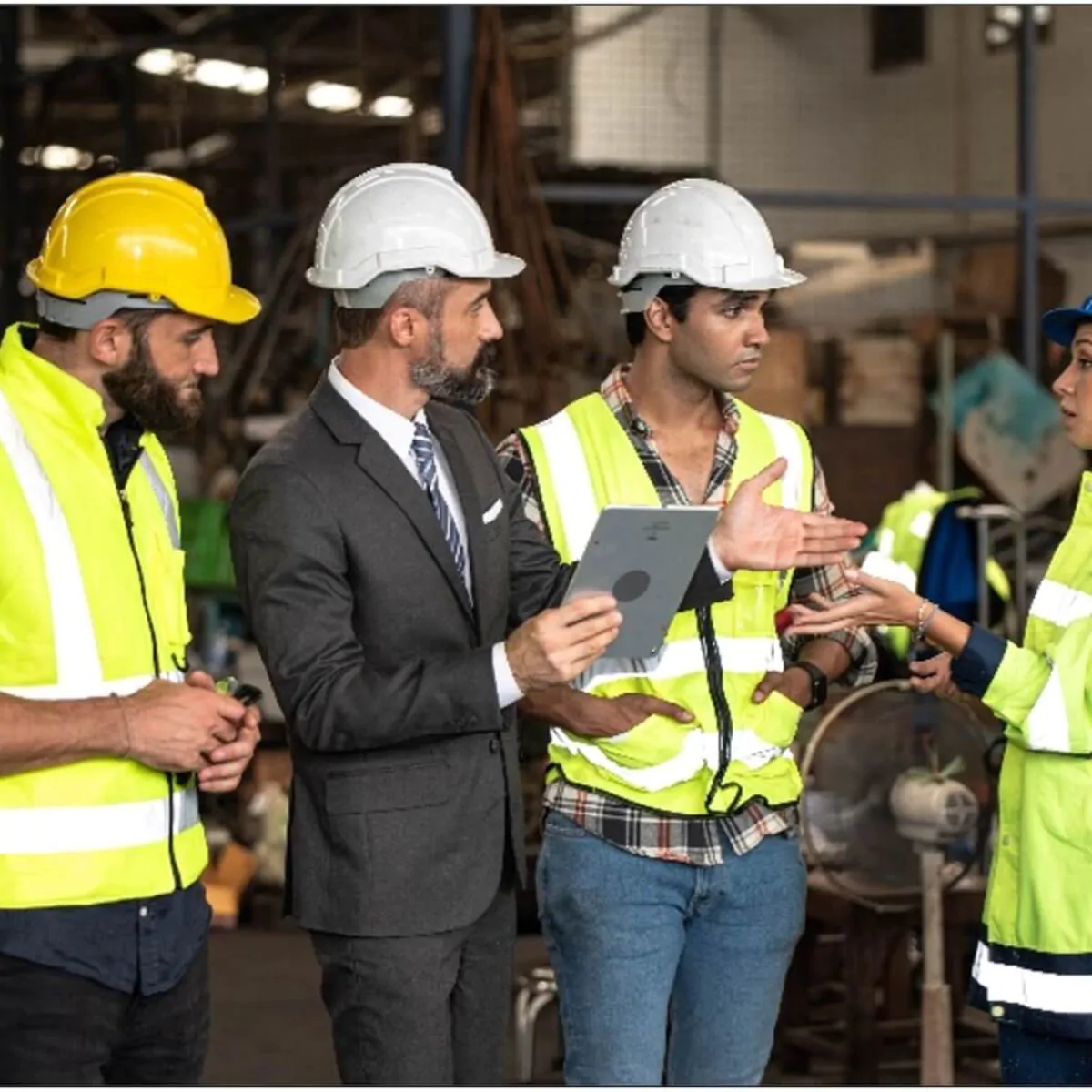
"The Future Of Workplace Safety: Combining On-The-Ground Expertise With Global Tech Solutions
The safety industry is at a turning point. For centuries, advancement brought better engineering control, more comprehensive training, and more strict enforcement. These techniques are still necessary but they've also seen declining returns in a variety of industries. The next big leap will take place not from one innovation but from the fusion of two strengths that for a long time been isolated an understanding of the contextual depth of safety experts who understand specific workplaces, and the analytical capability of technological platforms worldwide that can manage huge amounts of data and identify patterns invisible to any one person. This merger is not about replacing humans with algorithms. It's about improving human judgment with machine intelligence so that the safety worker on the ground gets more effective, prescient, and more impactful and effective than it has ever been. It is the new reality of work security is to those who blend the worlds of safety and technology seamlessly.
1. the limits of Purely Technological Approaches
Technology companies have repeatedly stated that software alone could improve workplace safety. Sensors could spot hazards algorithmic systems would be able to predict incidents, and artificial intelligence would tell workers what to do. These promises have never been fulfilled because safety is fundamentally a human problem. It is a matter of human behavior, human judgment, human relationships and the human consequences. Technology may inform and facilitate but it is not able to replace the in-depth understanding that an skilled safety professional brings into a complex work environment. The future is about integration not replacement.
2. How to limit Purely Human Approaches
In contrast, the human approach have reached their limit. Even the most knowledgeable safety expert can only look at too much, keep track of numerous details, and link several dots. Human judgment is subject to fatigue, bias as well as the limitations of the individual perspective. A single person is unable to grasp in their mind the patterns that emerge across numerous sites as well as the major indicators that have been a precursor to other incidents, or the changes to regulations that affect industries that they personally do not follow. Technology extends human capability beyond its natural limits, bringing the ability to remember patterns, memory, and global coverage that improve rather than replace professional judgment.
3. Predictive Analytics tells you where to Go
The most powerful application of merged capabilities is predictive analytics which informs experts on the ground where to focus their efforts. The software analyses previous incident information, near-miss reports, audit results, and operational metrics to discover situations, locations, and situations that are associated with increased risk. The safety professional investigates the results, using an innate sense of what they mean in the context. Are the risks predicted to be real? What are the underlying causes behind them? What interventions make sense here in the context of local constraints and cultural contexts? The technology provides the information; the individual decides.
4. Sensors and wearables produce continuous Data Streams
The rise of wearable devices and sensors that monitor the environment produce constant streaming of safety-related information that can't be collected by humans. Heart rate fluctuation indicates fatigue. Air quality measures identifying hazardous exposures. Locating tracking can identify unauthorised access to areas that are hazardous. Motion sensors detecting slips or falls. Platforms across the globe aggregate this data across regions and sites which identify patterns that demand human attention. Experts on the ground then analyze the sensor readings, verifying their accuracy, comprehending context and determining appropriate responses. Sensors provide the data but the human experts give the context.
5. Global Platforms Allow Local Benchmarking
Safety professionals have always wanted to know how their performance compared to other colleagues, however, meaningful benchmarks weren't always available. Global technology platforms improve this by gathering anonymised data across regions and industries. The safety director in Malaysia can now assess how their incident rates auditor findings, incident rates, and leading indicators compare with similar facilities within their region and globally. The benchmarking helps set priorities as well as substantiates request for resources. When local experts can show that their results are not in line with competitors in the region, they have influence for investing. When they take the lead they are able to gain credibility and acknowledgement.
6. Digital Twins Allow Remote Expert Consultation
Digital twin technology -- which allows for virtual replicas from physical workplaces that adjust in real time -- allows for a fresh model for expert consultation. If an on-site safety officer encounters a complex problem they can communicate with subject matter experts around the world who can examine the digital counterpart, scrutinize relevant information and provide guidance without having to travel. This allows for democratization of access to information, allowing facilities that are located which are in remote locations as well as developing economies to gain access to world-class information that otherwise be unavailable or unaffordable.
7. Machine Learning Identifies Leading Indicators
The traditional safety metrics are completely sagging. They reveal what has already happened. Machine learning applied to integrated data sets is increasingly adept at identifying indicators to predict future events. Changes in near-miss reporting patterns. Changes in the kinds of observations that are recorded during safety walks. Time intervals between hazard identification and correcting. These indicators that lead the way, analyzed by algorithms, become key points for ground experts and can identify the cause creating the shifts and intervene before incidents occur.
8. Natural Text Processing Extractions Insight from Unstructured Data
The majority of relevant safety data is available in unstructured form, for example, investigation reports, safety meetings minutes, notes on interviews, email conversations. Natural language processing tools within integrated platforms can examine the text in a large-scale manner to identify thematic patterns, sentiment shifts, and emerging concerns that no human reader could synthesize. When the software detects that employees from multiple locations are experiencing similar frustrations over the same procedure this alerts regional or global experts to investigate whether the procedure is in need of overhaul, not just local enforcement.
9. Training becomes personalised and adapted
The merger of on-the-ground expertise along with global technologies allows for training that is tailored to each worker needs. The platform monitors each worker's task, knowledge, and experience, as well as their incident timeline, and even the completion of their training. If specific patterns indicate knowledge issues--people who work in certain roles regularly involve in certain kinds of incidents--the system suggests specific learning interventions. Local experts scrutinize these recommendations adjusting for context, and oversee delivery. Training is continuous and personalized instead of being sporadic and general that addresses actual needs rather than merely addressing the requirements of assumed.
10. The Safety Professional's Role Inspires
Perhaps the most important consequence of this merger is the advancement of the job of the safety professional. In the absence of data collection and the generation of reports that software handles better, specialists on the ground concentrate on more lucrative actions like building relationships with workers, analyzing operational realities and designing effective interventions and changing the culture of the organization. Their judgment becomes more valuable as it is informed by details they could not have gathered themselves. Their recommendations carry more weight because they're based on evidence that goes far beyond personal experience. The new safety professional in the workplace is not apprehensive about technological advancements, but instead empowered by them. They're more informed, more influential and more effective than ever before. Read the most popular health and safety audits for site info including on site health and safety, occupational health, on site health and safety, safety tips for work, work safety training, health and safety and environment, fire protection consultant, on site health and safety, workplace hazards, safety video and more.